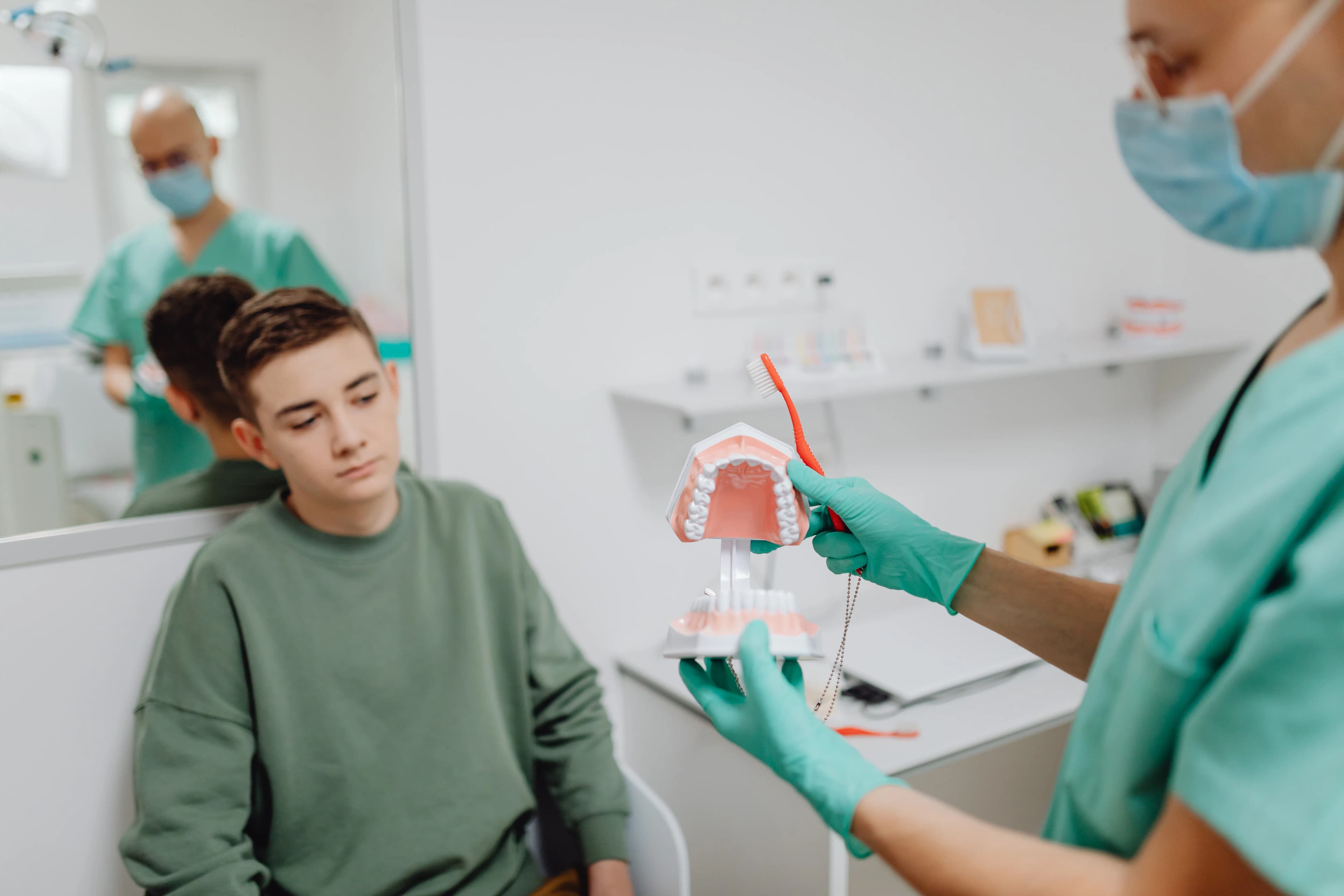
Your Kid's First Dental Visit: What to Expect
One of the questions I hear most often from new parents is some version of, "Is it too early?" It almost never is. Early dental visits aren't about doing a lot of treatment on a tiny mouth — they're about building comfort, catching problems while they're small, and giving parents real, practical guidance before habits (good or bad) get set. Here's how I like to walk families through the first visit and the years that follow.
When Should You Schedule the First Visit?
The American Academy of Pediatric Dentistry and the American Dental Association both recommend scheduling your child's first dental visit by their first birthday, or within six months of their first tooth erupting — whichever comes first. That earlier timeline surprises a lot of parents who grew up thinking the dentist was a school-age milestone.
The reasoning is simple: tooth decay can start as soon as teeth appear, and baby teeth matter more than many parents realize. They hold space for adult teeth, support healthy chewing and speech development, and a cavity in a baby tooth can affect the permanent tooth developing underneath it. Seeing a dentist early lets us catch small issues — or even just risky feeding or bottle habits — before they become bigger problems.
What Actually Happens at the First Appointment
The first visit is intentionally low-key. For a baby or young toddler, we often do what's called a "knee-to-knee" exam: your child sits facing you on your lap, then leans back into my lap so I can get a good look at their teeth and gums while you hold their hands. It usually takes just a few minutes.
During this visit, I'm checking for early signs of decay, looking at how teeth are erupting, and evaluating your child's bite. Just as important, I spend time talking with parents about brushing technique, fluoride use appropriate for their age, bottle and sippy cup habits, thumb-sucking or pacifier use, and teething. Think of it less as a "procedure" and more as a foundation-setting conversation between you and me — your child's comfort is the whole point, not a secondary concern.
How to Prepare a Nervous Toddler
By the time kids are two or three, some of them have picked up on the idea that the dentist is something to be nervous about — often without ever having had a bad experience themselves. A few things genuinely help:
- Keep your own language neutral. Avoid words like "hurt," "shot," or "pain" even when reassuring them — kids latch onto the words, not the reassurance.
- Read a picture book about visiting the dentist together a few days before the appointment so the office feels familiar rather than unknown.
- Let them bring a comfort item, like a stuffed animal, and consider letting the stuffed animal "go first" for a pretend exam.
- Schedule the visit for a time of day when your child is well-rested and fed, not right before a nap or at the end of a long day.
- Stay calm and matter-of-fact yourself. Kids are remarkably good at picking up on a parent's anxiety, even when it's well hidden.
What to Expect as Your Child Grows
Dental care evolves as your child does, and knowing the general timeline helps you know what to ask about at each visit:
- Ages 1-3: Twice-yearly checkups, fluoride varnish applications, and ongoing coaching on brushing (we recommend parents help brush until around age 6-7, when most kids develop the dexterity to do a thorough job on their own).
- Ages 6-7: First permanent molars typically arrive — this is usually when we recommend dental sealants, a thin protective coating painted onto the chewing surfaces of back teeth, which are the most cavity-prone spot in a child's mouth.
- Around age 7: The American Association of Orthodontists recommends a first orthodontic evaluation by age 7, even if braces are years away. This lets us catch bite or spacing issues early, when some problems are far easier to guide than they would be later.
- Preteen and teen years: Continued cavity prevention, wisdom tooth monitoring beginning in the early teens, and orthodontic treatment if it's recommended.
A Note From Dr. Chandran
I built our practice's First Visit program because I wanted every child's introduction to the dentist to be a genuinely good one — not just tolerable, but actually positive. Kids who have calm, friendly early experiences carry that comfort with them for life, and that's a gift that pays off well beyond childhood. If your little one hasn't had their first visit yet, or if it's been a while and you're dealing with some dental anxiety, our Redlands office is a great place to start over.
Dr. Priya Chandran
Pediatric & Family Dentist, DDS — created our practice's "First Visit" program for nervous first-time patients of any age
More from our blogKeep Reading
Related Posts
The Complete Guide to Dental Implants in Riverside
Everything you need to know about the dental implant process, from consultation to your new smile — including cost, recovery, and how to find the right provider in Riverside.
Dr. Michael Osei · June 12, 2026
Teeth Whitening Options Compared: In-Office vs. Take-Home vs. Strips
We break down the pros, cons, cost, and expected results of every whitening option we offer, so you can pick the right one for your smile and budget.
Dr. Sarah Whitfield · May 10, 2026
Ready to Book Your Visit?
Our team across Riverside, Temecula, and Redlands is ready to help. Call (951) 555-0300 or request an appointment online.
Book Your Visit